- Resource quality is not the same as project viability.
- Grid connection and land often decide the real schedule.
- A feasibility study must end with a clear decision and next scope.
A solar feasibility study should give a client enough confidence to spend real money on the next stage, or enough clarity to stop. A report that only describes a site is not a feasibility study. It must answer the questions that determine whether the project can be built, financed and operated.
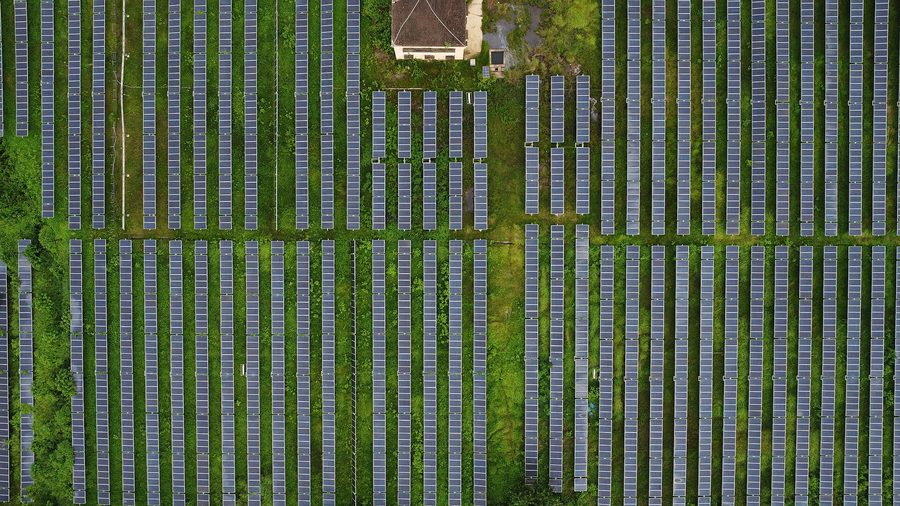
Start with the question, not the template
Every solar project starts with a different commercial question. A utility-scale developer may want to know whether a site can support a bankable independent power project. A manufacturer may be testing whether rooftop solar can reduce operating costs. A county government may want to understand how a solar facility could support local energy access. The feasibility study should be built around that question.
We begin by agreeing the decisions the study must support. That defines the level of site work, the accuracy of the cost estimate, the depth of the grid study and the financial model. It also prevents the common problem of producing a long report that leaves the client unable to make a decision.
Resource, site and layout
The resource assessment should use reliable irradiance data, adjusted for local conditions. Terrain, horizon shading, temperature, dust, humidity and rainfall all affect yield and equipment selection. A site that looks suitable on a map may have drainage problems, access constraints or ground conditions that change the foundation design.
We review the site layout against the array, access roads, inverter and transformer locations, cable routes, drainage, security and future maintenance. The layout should be buildable, not just efficient on paper. We consider construction access, laydown areas, water supply, worker facilities and the sequence of earthworks and foundation works.
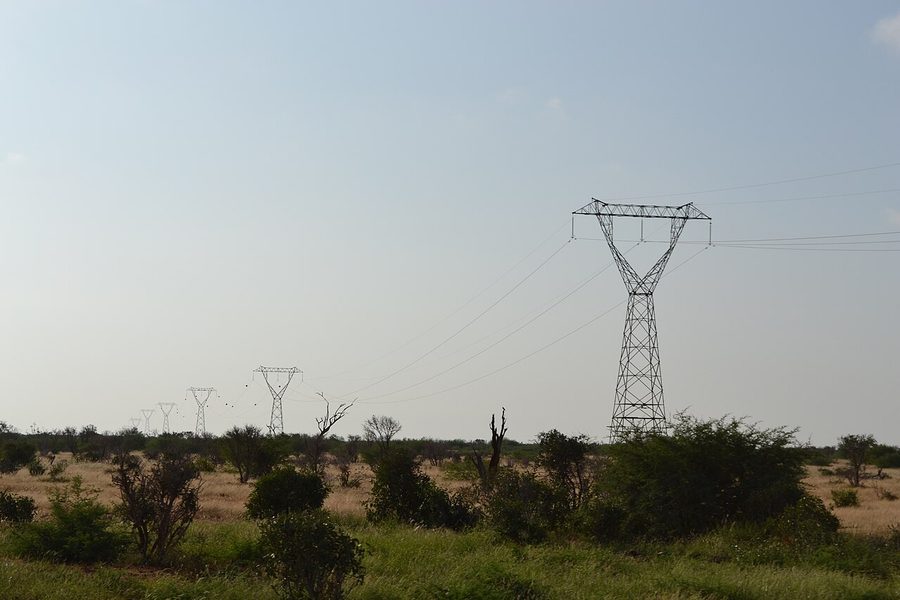
A solar plant is only bankable if the connection is technically feasible, costed and deliverable. The transmission route, substation and approvals belong in the feasibility study, not in a separate afterthought.
Grid and transmission
The grid connection is often the largest technical uncertainty. The study should confirm the available capacity, voltage level, connection point, line route and substation requirements. It should identify the studies the system operator will require, including load flow, short circuit, protection and stability studies where relevant.
For projects that require a new line, the route, wayleaves, land access and environmental constraints must be assessed early. A generation project cannot reach financial close if the connection is not technically feasible or commercially acceptable.
Land, permits and environmental and social issues
Land tenure, zoning, land use, water rights and access rights need to be understood before design is fixed. We identify the approvals required and the studies needed to support them. Environmental and social screening should begin early enough to influence the layout and the schedule, not after the design is complete.
The study should identify sensitive areas, community concerns, land acquisition requirements and the potential need for an environmental and social impact assessment. For projects on customarily held land, the social and resettlement implications need particular attention.
Engineering, cost and financial model
The technical solution should be described in enough detail to produce a credible cost estimate. That includes the module and inverter concept, mounting structure, foundations, electrical balance of plant, substation, transmission, access roads, drainage, fencing and construction facilities.
Capital and operating costs should be built up transparently, with allowances for contingency, escalation, import duties, logistics and owner costs. The financial model should show the assumptions behind tariff, revenue, debt, equity, taxes and sensitivity. A single point estimate is less useful than a range that shows what happens when yield, cost or tariff assumptions change.
Risk and the decision package
The output should include a risk register that distinguishes technical, commercial, regulatory, environmental and delivery risks. Each risk should have an owner and a next action. The report should state what is known, what is assumed and what still needs to be tested.
We present the recommended option, the reasons for it and the conditions that must be met before the next stage. That may be a set of surveys, a grid application, a land agreement, a revised layout or a more detailed financial model.
Where Amanda Engineering can help
Our team has prepared feasibility studies for solar and hydro projects, including the 30.5 MW Muhoroni solar farm, the 60 MW Embobut hydro plant and the 20 MW Sidikho hydro project. We combine engineering, environmental and financial inputs so that the study answers the questions that matter to the client, the lender and the community.
A simple feasibility scorecard
A useful study can be read as a scorecard. Each row should show what was tested, what evidence supports the conclusion and what remains uncertain.
| Question | What good looks like | Evidence |
|---|---|---|
| Resource | A bankable yield range, not a single number | P50 and P90 yield, uncertainty analysis, ground or satellite data |
| Site | A layout that can be built and maintained | Topographic survey, geotechnical report, flood and drainage assessment |
| Grid | A connection that is technically and commercially feasible | Connection point, capacity, line route, system studies |
| Land and permits | A clear path to secure tenure and approvals | Land records, environmental screening, wayleave requirements |
| Cost | A transparent range with contingency | BOQ, supplier quotations, logistics and owner cost estimates |
| Commercial | A financial model that can survive stress | Tariff or PPA assumptions, debt terms, sensitivity analysis |
How to read the results
The report should distinguish between facts, assumptions and judgements. A yield number is not a fact until the uncertainty around it is understood. A capital cost is not a commitment until it is supported by quotations or recent comparable projects. A grid connection is not confirmed until the system operator accepts the study.
Look for the sensitivity cases. What happens if yield is 10 percent lower, costs are 15 percent higher, or the tariff is delayed by a year? A project that only works under the best-case assumptions is not ready for the next stage.
Common mistakes
- Using a single irradiance value without an uncertainty range.
- Assuming grid capacity without a formal connection study.
- Leaving land acquisition and environmental approvals outside the study.
- Producing a cost estimate without a clear basis or contingency.
- Ending with a recommendation but no next scope or decision gate.
Resettlement planning along transmission corridors
Need support on a project like this?
Our team can help with feasibility, design, procurement, construction supervision and project management. Tell us about the site, scope and stage of your project.
Discuss a project